
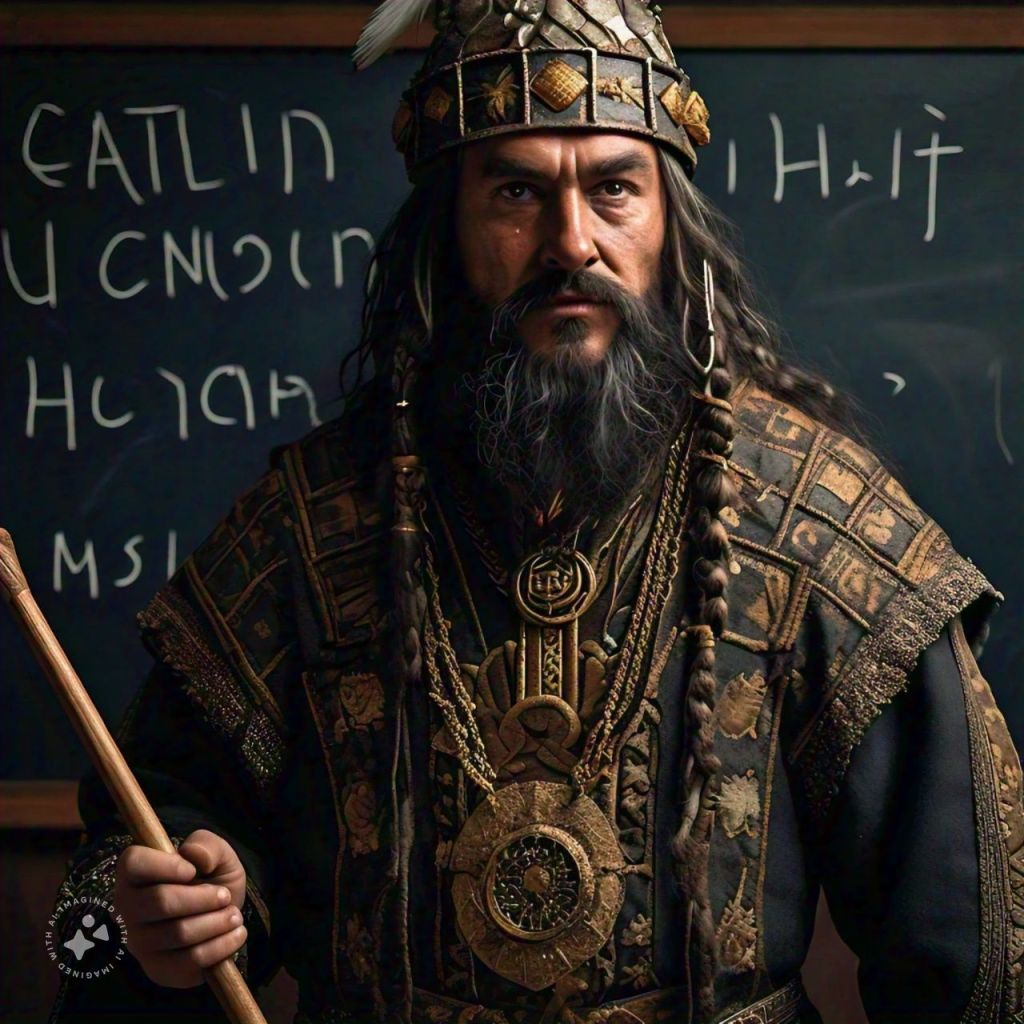
There, where I have passed, the grass will never grow again.
Historically attributed to Atilla the Hun
While idly working my way through some menial house chores the other day, listening to a podcast about Attila the Hun from one of my favourite Noiser series called Real Dictators playing in the background (honestly, it makes the humdrum of house chores that much more bearable) I couldn’t help but wonder: how does a 5th-century warrior-king fit into the rhythm of modern life? Between loading the dishwasher and vacuuming the floor, Attila’s marauding cavalry clashed in my mind with the hum of my Roomba.
The name “Attila the Hun” evokes images of brutal conquests, ruthless invasions, and a relentless pursuit of power. Attila, who ruled the Hunnic Empire from 434 to 453 AD, was one of the most feared enemies of the Roman Empire, earning his moniker “The Scourge of God.” Naturally, his reputation as the “Scourge of God” seemed worlds apart from my mundane world of grocery lists and emails. But as I scrubbed away at a stubborn pot, I started thinking—maybe Attila’s legacy still stirs beneath the surface of our day-to-day lives. Could this infamous barbarian still have something to teach us between the mundane and the epic?
Attila the Hun is remembered in a complex and multifaceted way in modern contexts. His legacy spans historical study and popular culture, with varying portrayals depending on the perspective. German Emperor Wilhelm II famously invoked Attila the Hun in his 1900 Hunnenrede (‘Hun Speech’) to inspire German troops heading to China, urging them to act with ruthless force, much like Attila’s Huns. Wilhelm aimed to evoke fear and strength, using Attila as a symbol of merciless power. This speech later influenced Allied propaganda in World War I, portraying Germans as “Huns” to emphasise their perceived brutality.
In modern pop culture, Attila is often portrayed as the archetype of a barbarian conqueror. Films, books, and video games tend to emphasise his ruthlessness, military prowess, and role as a destroyer of civilisations. These depictions are usually dramatised, playing up the “barbarian-invader” trope, even though historical sources offer a more nuanced image of his leadership and diplomacy.
From a high-level historical perspective, Attila is remembered as a formidable leader who led the Huns in the 5th century, wreaking havoc on both the eastern and western Roman empires at the point of their collective decline. Historians note his ability to unite different nomadic tribes under a single banner and his prowess in exploiting the weakening Roman Empire. Although he is often seen as a destructive force, recent scholarly work highlights his political acumen and diplomatic strategies, presenting him as more than just a brutal invader.
As such, whilst he is often remembered for his military campaigns, Attila’s reign provides valuable lessons beyond warfare. His life and legacy offer significant historical, economic, and social insights that arguably remain relevant today.
Reflections from history’s mirror: The Power of Adaptability and Strategic Alliances
One of the primary historical lessons from Attila’s leadership is the importance of adaptability. The Huns, originally nomadic pastoralists from the Eurasian steppes, adapted quickly to various terrains, military tactics, and political environments. Attila’s ability to combine traditional nomadic warfare—based on speed and mobility—with the adoption of siege warfare techniques learned from the Romans illustrates the power of hybrid strategies. Modern organisations can draw from this adaptability by fostering flexibility in the face of changing circumstances, whether in business, politics, or technology.
Attila’s diplomatic skill was also noteworthy. Contrary to his portrayal as a savage, Attila was a shrewd diplomat who negotiated with the Romans and other European powers. He often used alliances, threats, and diplomacy to secure tributes and favourable terms without immediate violence. He formed temporary alliances with other barbarian tribes and, at times, manipulated the Romans’ internal divisions to his advantage. This ability to form strategic partnerships, even with rivals, is a lesson in the value of networking and diplomacy in modern global interactions.
Economic Policy: The Power and Limits of Plunder Economies
Attila’s economic strategy largely revolved around plunder and extortion. The Huns raided territories or demanded vast tributes in gold and resources from the Roman Empire. This approach gave Attila significant short-term wealth and power. The Huns’ economic success during his reign was built on their ability to extract resources through force or the threat of force, an effective but unsustainable method of growth.
The lesson here is clear: while aggressive acquisition can lead to rapid wealth accumulation, economies based purely on extraction, without long-term investment in sustainable infrastructure or trade, are prone to collapse. After Attila’s death, the Hunnic Empire disintegrated swiftly, lacking the institutions or economic foundations to endure. This reflects modern-day examples where extractive economies, particularly those reliant on finite resources like oil or minerals, face long-term challenges if they do not diversify and invest in human capital, innovation, and sustainable industries.
Additionally, the tributes Attila demanded from the Romans can be likened to modern financial pressure and economic sanctions. The tribute system weakened the Roman Empire, diverting resources that could have been used for internal stability or defence. In contemporary economics, nations can similarly undermine competitors by forcing them into disadvantageous financial positions through debt, tariffs, or sanctions. However, as with Attila, these tactics can eventually backfire if they strain resources to the breaking point.
Lessons in Human Dynamics: The Role of Leadership and Identity in Unifying Diverse Groups
Attila’s ability to unite the various tribes of the Hunnic Empire under his command speaks to the social power of leadership and the construction of a unifying identity. The Huns were a confederation of diverse groups, including Scythians, Goths, and other tribes. Despite cultural and linguistic differences, Attila managed to create a sense of common purpose through a combination of charisma, fear and shared economic interests. His reign illustrates how powerful leadership can galvanise a disparate population, creating cohesion through either force or shared vision.
This has social implications for modern-day leadership, particularly in multicultural societies or organisations. Leaders who can harness the strength of diversity while fostering a unifying vision are more likely to create strong, resilient communities. However, Attila’s reign also shows the risks of relying too heavily on personal charisma and fear-based leadership. After his death, without a clear succession plan or institutional frameworks, the Hunnic Empire quickly fractured. For modern leaders, this emphasises the importance of building strong institutions and systems that can outlast individual leaders.
Moreover, the Huns, despite being seen as outsiders or “barbarians” by the Romans, profoundly impacted European social structures. Attila’s invasions contributed to the eventual weakening of the Roman Empire, leading to the migration of various tribes and the reshaping of European demographics. This points to the broader social lesson of migration and integration. While Attila’s forces were feared, mixing populations eventually contributed to the cultural melting pots that defined medieval Europe, illustrating that the movements and interactions of diverse groups often shape societies.
The Dual Legacy of Attila the Hun
In modern scholarly debate, Attila’s legacy is re-examined with more nuance. Some historians view him as a military genius who skillfully exploited the weaknesses of the Roman Empire. Others criticise the simplistic portrayal of Attila as merely a savage, emphasising his role in the complex geopolitical shifts of Late Antiquity. Irrespective of the angle one takes, in concert, Attila is remembered as both a feared invader and a powerful leader, symbolising the tension between “civilisation” and “barbarism” and how history is often shaped by the perspective of those who write it. Collectively, Attila the Hun remains a complex historical figure—both a fearsome conqueror and a figure of strategic genius. His reign offers numerous lessons on adaptability, leadership, and economic sustainability. From a historical perspective, his ability to adapt and form strategic alliances showcases the importance of flexibility in leadership and strategy. Economically, his reliance on plunder is a cautionary tale against short-term, extractive economies. Socially, his unification of diverse groups under a shared purpose highlights the power of strong leadership, though it also reveals the fragility of systems based solely on personal authority.
Reflecting on Attila’s legacy reminds us that even the most feared empires can rise and fall quickly, leaving behind valuable lessons for future generations. As we navigate today’s complex global systems, the experiences of past leaders like Attila offer timeless insights into the importance of adaptability, sustainable growth, and inclusive leadership.

 Bacchus MindEconomy Chronicle
Leave a comment